
Why building Your Own AI Context Layer Is Harder Than It Looks
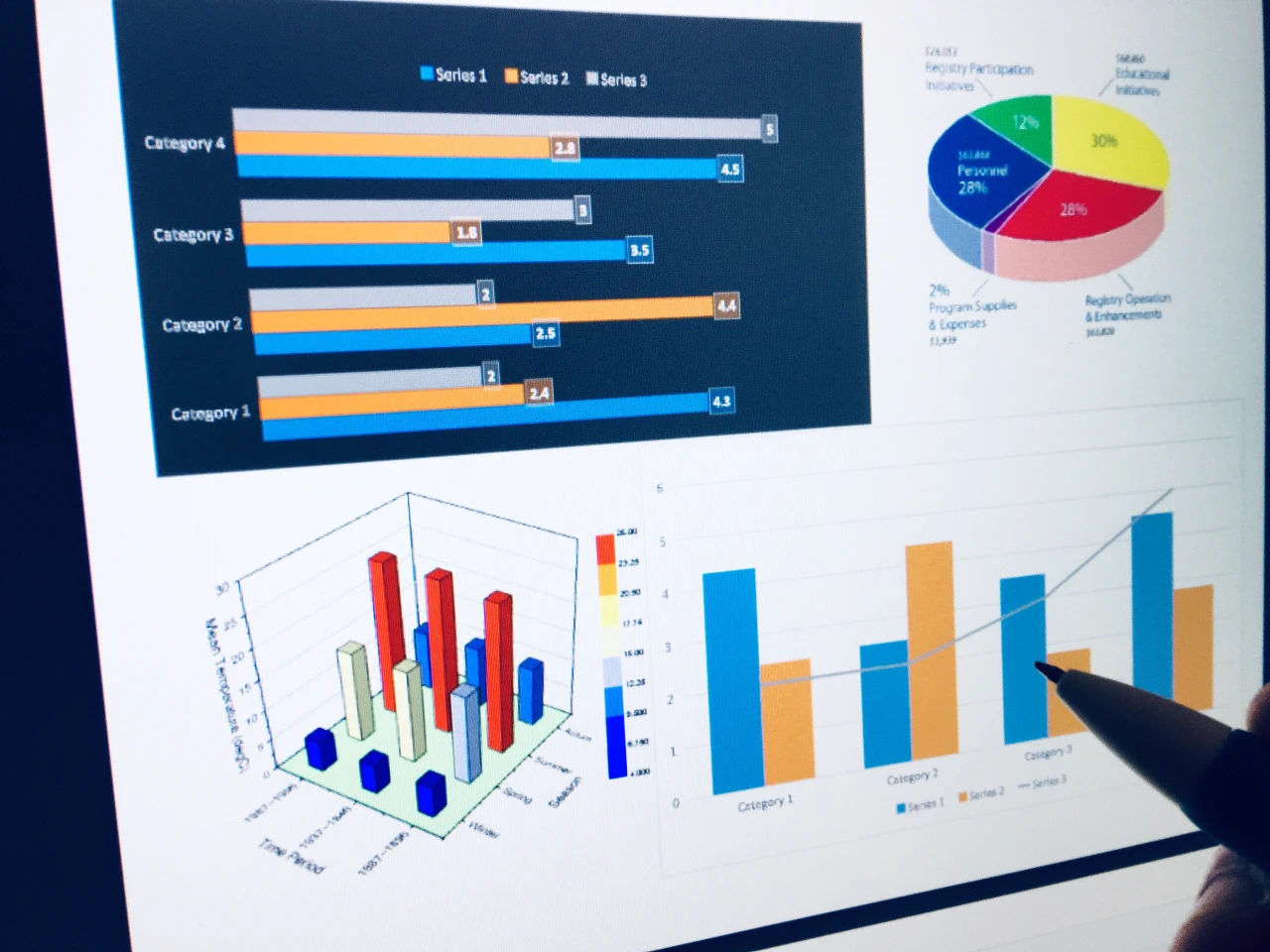
Structured context and an AI application layer can find performance opportunities and recommend the best actions across multiple locations.

AI Context Layer: why building your own is hard
Dropping your documents into a vector database and pointing an LLM at them isn't a context strategy.
It's a search engine.
It's better than nothing.
But if you want AI to consistently find performance opportunities and recommend the right actions across dozens of locations, you need something with far more structure and a much clearer point of view than a pile of retrieved files.
What most teams actually build when they try this themselves
Almost every team builds the same thing first: a retrieval index.
You collect:
- The reports
- The SOPs
- The spreadsheets
- The meeting notes
- The historical data
You load them into a vector database.
You wire up a RAG pipeline.
Then you point a model at it and hope the model figures out the rest.
Brad Peters, who ran what became Oracle's business intelligence group before founding Scoop, describes the instinct directly:
What am I going to do? I'm going to create a giant dumping ground of stuff, and maybe I'll use a vector database and a RAG index or something, and I'll just throw a bunch of stuff in there and hope the LLM sorts it all out. That's better than nothing. But it's not structured context.
Every location diagnosed. Every cycle.
Scoop is AI performance management for distributed businesses. It diagnoses performance at every location, every cycle, and hands every manager a clear action plan.
- Every location, every cycle
- Role-specific action plans
- No prompting required
A retrieval index’ problem
Retrieval finds documents that look relevant to a question.
It does not know:
- What those documents mean
- Which numbers matter
- What to do about them
Ask it why comp sales dropped 4% at a location and it will surface a few passages that mention comp sales.
It will not tell you the drop is driven by a labor-cost overrun in a single daypart, or that the same pattern showed up at three other stores last quarter and got fixed by re-sequencing the shift schedule.
That problem becomes expensive the moment you use these outputs to drive operational decisions.
What most self-built RAG setups produce:
Inconsistent answers
The same question phrased two ways returns two different conclusions.
No point of view on what is normal
It cannot separate a real exception from routine noise, because nobody told it where the thresholds are.
Retrieval without recommendation
It finds the passage. It does not know the next move.
Outputs operators can't trust
When a diagnosis can't be traced back to a reason, a district manager won't act on it.
Trust is the whole game, which is why black-box AI fails in operations even when the underlying model is strong.

What structured context actually means
Structured context is the difference between a pile of documents and a purpose-built model of how your business is supposed to run.
- A document dump answers what is in the files.
- A context model answers what matters, what it means when it moves, and what to do next.
To make this something that actually is a much more performant system requires a very strong point of view on what you're trying to accomplish, what information is actually relevant to that goal, and how to organize it so the AI can navigate it correctly.
Brad Peters, CEO of Scoop Analytics
Three things have to be true, and none of them come for free:
A defined goal
Not analyze the data, but a specific objective: catch margin erosion before it hits the P&L, or flag adherence drift the week a standard starts to slide.
A relevance model
Of everything you could feed the AI, what actually bears on that goal. For operations, that means the metrics that matter, what they signal when they move, which patterns are real problems versus noise, and the actions that tend to correct them.
An organizing structure
The context has to be arranged so the AI can navigate it the way an experienced operator navigates a review, not left as a flat heap for a retriever to guess at.
Every SaaS application already runs on a data model
Salesforce has one. Your ERP has one.
It defines the objects, the relationships, and the rules that make the software coherent instead of a blob of records.
AI performance management needs the same thing: a context model that defines
- What the AI looks at
- How it interprets what it sees
- How it connects a metric movement to a recommended action
This is why agentic analytics that works in production tends to be built on a structured layer rather than raw retrieval.
The structure is what lets it move from prescriptive analytics in theory to a specific action a store manager can take on Monday.
It is closer to decision intelligence than to search.

Why this is an application problem, not a prompt problem
Teams treat this as a prompting exercise. It isn't.
It's an application problem, and the distinction is the whole point.
Think about the last generation of enterprise software. Oracle sold the database. It was powerful, general-purpose infrastructure.
But a database doesn't run a sales process. Salesforce did that.
Salesforce is the application on top: a data model, a workflow, and a body of business logic about how the work actually happens.
The database was necessary. It was never sufficient.
We're the Salesforce layer. Claude and ChatGPT are the database.
Generic AI is the new infrastructure
Claude, ChatGPT, and the models underneath them are extraordinary general-purpose engines, the way a database is an extraordinary general-purpose store.
But a raw model no more encapsulates your operating judgment than a raw database encapsulates a sales pipeline.
It has no workflow, no methodology, no point of view about your business.
That is the application layer's job.
What AI Performance Management needs for the Context Layer
An AI performance-management application needs the same three ingredients any real application has:
A methodology
A defined way of investigating performance, not a fresh guess on every question.
A workflow
- Screen every location
- Flag the exceptions
- Investigate the causes
- Recommend actions
- Track whether the last cycle's actions worked
This is the business logic test that separates an analyst from a search box.
A structured context model underneath
The operator's judgment, captured and organized so the same logic runs everywhere.
This is also where techniques like combining machine learning with LLMs earn their keep, by grounding the model's language in real patterns in your data.
A prompt is a one-time instruction.
A context model is a persistent framework that shapes every analysis.
That is why building this yourself is harder than it looks: you are not writing a clever prompt, you are building an application, complete with the operating logic that makes how Scoop works a repeatable methodology rather than a one-off.
It sits on top of your existing BI and warehouse, the same way an application sits on top of a database, and it is the reason traditional BI leaves the interpretation to you while an application layer does the interpreting.
Codify what your best operators already know.
Scoop captures your operators' tribal knowledge, screens every location automatically, and delivers role-specific action plans. Nobody writes a prompt. The plan just arrives.
- Codified tribal knowledge
- Automatic screening
- Action plans, not dashboards
Building an AI Context Layer for your BI Stack using Scoop
The reason Scoop Analytics exists is that this problem doesn't have a shortcut.
- A vector database is a search engine.
- A prompt is an instruction.
- Neither is a point of view.
Getting an AI to consistently find performance opportunities and recommend the right action means building the application layer, methodology, workflow, and a structured context model, on top of the AI performance management infrastructure the models already provide.
If you're trying to figure out what a real AI performance management layer should look like for your operation, that is the conversation worth having.

Frequently asked questions about why building your own AI Context Layer is hard
What's wrong with using a RAG setup for operational analytics?
Nothing, as a starting point. But RAG is retrieval. It finds relevant documents. It doesn't know what to do with what it finds. Without a structured context model telling it how to interpret a metric, when an exception matters, and what action to recommend, you get inconsistent outputs operators can't trust. A few things it can't do on its own:
- Separate a real exception from routine variance.
- Connect a metric movement to a specific recommended action.
- Explain its reasoning well enough that a manager will act on it, which is where an agentic analytics approach built on structure pulls ahead.
How is a context model different from a prompt?
A prompt is a one-time instruction. A context model is a persistent, structured framework that shapes how AI approaches every analysis: what to look for, how to interpret it, and how to connect it to a recommended action. It's the difference between telling someone what to do once and training them how to think.
- A prompt lives for one query. A context model persists across every cycle.
- A prompt describes a task. A context model encodes judgment.
Can't we just fine-tune a model on our own data?
Fine-tuning changes what a model knows, not how it reasons about your specific business problems. You'd still need a structured approach to how that knowledge gets applied to performance-management decisions. Fine-tuning and structured context solve different problems.
- Fine-tuning adjusts the model's knowledge and tone.
- A context model governs how that knowledge gets used to diagnose and recommend, closer to neuro-symbolic AI than to more training data.
How do you know what context actually belongs in the model?
That's the hard part, and it requires a strong point of view on what you're trying to accomplish. For operations, the relevant context is a short, demanding list:
- What metrics matter, and what they mean when they move.
- What patterns indicate a real problem versus noise.
- What actions tend to correct those problems. Figuring that out takes deep operational expertise, not just data access, which is a core part of how you measure business performance in a distributed operation.
How long does it take to build a useful context model?
It's not a one-time project. The initial build requires structured extraction of knowledge from your best operators. Then it gets refined through feedback cycles: seeing it applied to real locations, correcting what's off, and adding exceptions and patterns as they surface. It's iterative, not a one-time lift. As Brad frames it, the output is closer to a consulting project that doesn't end, except the deliverable is intelligence that stays with your BI permanently.
- Initial build: capture how your best operator investigates, in structured form.
- Ongoing: refine against real locations, adding exceptions and patterns over time.
Get insights like this every week
Analytics, ops strategy, and product updates. No noise.
Keep reading

SaaS apps have data models. AI apps have context models. Here's why that distinction matters.
Scoop’s AI Data Tool: Your Own Data Analyst, Powered by Agentic Analytics

How Business Intelligence Helps in Decision Making
Book a discovery call
Reach out to start a two-way conversation about your industry, your performance variations across locations, and whether Scoop is the right fit for you.